By 7:30 AM, the day is already taking shape.
Orders are moving. Production is starting. Inventory is being allocated. Quality teams are reviewing exceptions. Customer service is fielding early requests. Distribution teams are balancing what shipped, what is delayed, and what needs attention now.
For leaders across manufacturing, distribution, packaging, quality, and commerce, the question is no longer, “What happened yesterday?” It is, “What do we need to know right now to protect today’s outcomes?”
That shift matters. The businesses that win the day are not simply the ones with more data. They are the ones that can see the right data earlier, understand what it means, and act before small issues become larger operational problems. The original “before 9 AM” framing focused on the signals plant leaders need to spot early risk. This broader view moves even earlier and expands the lens across the connected manufacturing and distribution lifecycle: before 7:30 AM, leaders need a clear, personalized view of what requires action.
The First Decision Window Is Earlier Than You Think
In many organizations, the first meeting of the day is spent gathering context. Teams compare spreadsheets, check dashboards, open ERP screens, scan emails, ask supervisors for updates, and try to identify which issues matter most.
That approach creates delay. By the time everyone has aligned on the problem or problems, the business may already be behind.
A manufacturer may discover a production constraint after labor has already been assigned. A distributor may realize a high-value order is at risk after trucks are loaded. A packaging operation may see backlog building too late to rebalance capacity. A quality team may uncover a defect after product has already moved downstream.
The problem is not lack of information. It is fragmented information.
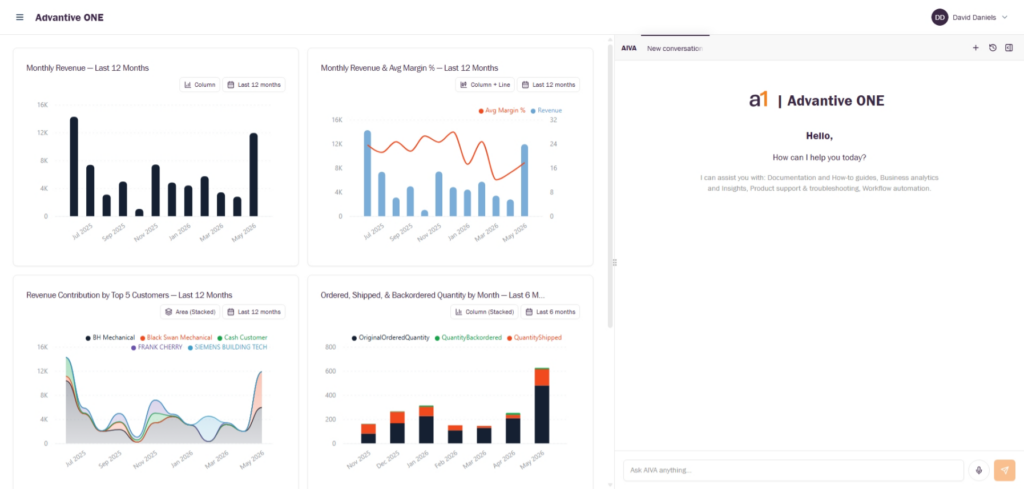
Advantive ONE is designed to help solve that challenge as a connected operational intelligence layer and unified platform. With Intelligent Workspaces, each user, from operators to leaders, can bring relevant information into a focused, personalized view that supports faster decision-making and clearer prioritization.
What Leaders Need to Know Before 7:30 AM
Before the day accelerates, leaders need answers to a few practical questions.
What changed overnight?
Was there a production delay, quality hold, missed shipment, backorder spike, inventory issue, or customer-impacting exception? Leaders need to see material changes quickly, without searching across disconnected systems.
What is at risk today?
Not every variance requires immediate attention. The key is knowing which issues threaten revenue, delivery commitments, throughput, margin, quality, or customer satisfaction.
Where should the team focus first?
When everything looks urgent, teams lose time. Personalized dashboards help leaders separate signal from noise so they can prioritize the actions that have the greatest operational impact.
Who needs to act?
Visibility is only valuable when it drives ownership. A workspace should make it easier for teams to understand what needs attention, who is responsible, and what decisions must be made now.
How Advantive ONE Workspaces Help
Advantive ONE Workspaces are built around the way teams actually work. Instead of forcing leaders to navigate multiple systems or generic dashboards, Workspaces provide tailored views that align to roles, responsibilities, and daily decisions.
For executives, that may mean a high-level view of revenue, margin, customer performance, order flow, and operational health. For operations leaders, it may mean production performance, shipment status, backorders, exceptions, and capacity indicators. For quality leaders, it may mean visibility into holds, trends, nonconformance, and areas requiring immediate attention.
The value is not just seeing more. It is seeing what matters most. A personalized workspace helps leaders start the morning with the right context. They can identify where the business is on track, where performance is drifting, and where action is needed. That creates a more efficient operating rhythm because teams spend less time gathering information and more time making decisions.
From Dashboard to Decision
Dashboards are useful, but dashboards alone do not transform operations.
The difference with Intelligent Workspaces is the move toward decision-ready visibility. A modern leader does not need another static report. They need a practical command center that helps connect priorities, performance, and action.
That is especially important across businesses with complex workflows. Manufacturing, packaging, distribution, quality, and commerce functions do not operate in isolation. A delay in one area often creates downstream effects elsewhere. A production issue can affect inventory availability. Inventory issues can affect order fulfillment. Fulfillment delays can affect customer satisfaction. Quality exceptions can affect revenue recognition, delivery timing, and brand trust.
When leaders can see these signals earlier and in context, they are better equipped to respond before issues compound.
The Efficiency Gain Is in the Morning Routine
One of the most powerful benefits of Workspaces is the ability to make the morning routine more efficient.
Instead of starting the day with manual checks, teams can begin with a shared view of priorities. Instead of waiting for someone to compile updates, leaders can review the indicators that matter to their role. Instead of reacting to issues after they escalate, teams can address exceptions while there is still time to influence the outcome. That efficiency compounds. Faster prioritization leads to faster action. Faster action protects throughput, delivery, quality, revenue, and customer trust.
A Better Start Creates a Better Day
Before 7:30 AM, modern manufacturers and distributors need more than reports. They need connected visibility, personalized context, and a clear path from insight to action.
Advantive ONE Intelligent Workspaces help leaders start the day with greater confidence by bringing the right operational signals into one focused view. For businesses managing complex production, fulfillment, quality, and commerce workflows, that kind of early clarity can be the difference between reacting to the day and directing it.
Learn more about Advantive ONE Workspaces or request a demo to see how connected operational intelligence can help your team make faster, smarter decisions before the day gets away.