When peak season approaches, it’s natural to think about what you might need to add: more seasonal labor, more warehouse capacity, more carrier options, more hours in the day.
But some of your most useful peak-season tools may already be available to you.
For VeraCore customers, the weeks before holiday volume accelerates are a good opportunity to revisit how your existing system is configured. Workflows that function perfectly well during normal operations can face a much different test when promotional bundles multiply, order volume climbs, and clients expect answers quickly.
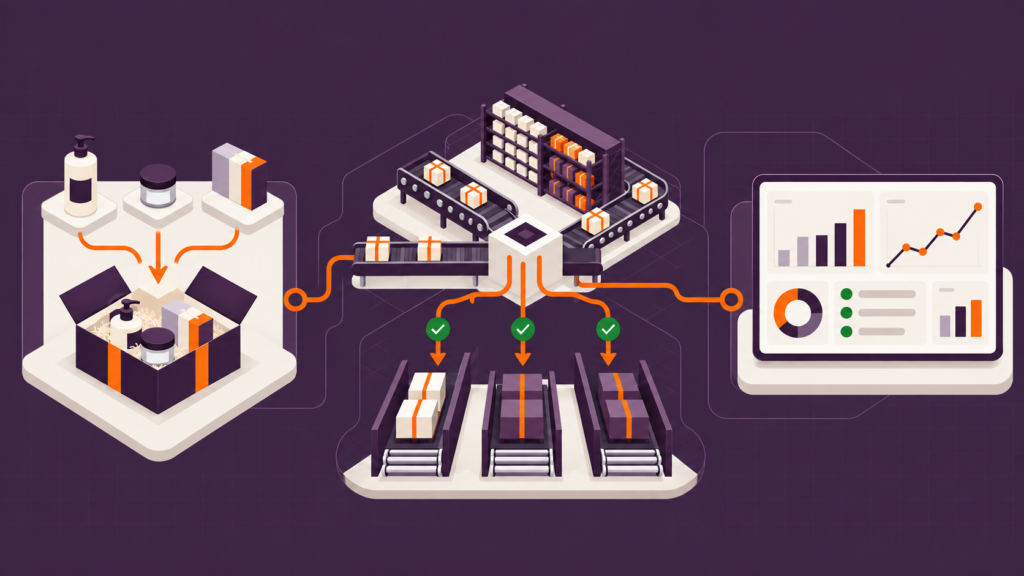
That’s why three VeraCore capabilities are worth a second look before the holiday rush: kitting, rules-based automation, and reporting and dashboards.
The objective isn’t to introduce a major technology project right before peak. In fact, logistics experts generally advise against introducing significant new systems or processes immediately before or during a peak period. Inbound Logistics recommends implementing major changes far enough ahead of peak to test and stabilize them.
Instead, this is about making sure the VeraCore capabilities you already have are configured for the way your operation needs to work when volume rises.
Kitting: Get Promotional and Holiday SKUs Ready Early
Holiday promotions can make fulfillment more complicated in a hurry.
A client that normally sells individual SKUs may introduce gift sets, promotional bundles, subscription packages, or other multi-item offers for the season. For the consumer, it’s one product. For the fulfillment operation, it can mean several inventory items that need to come together accurately and consistently.
That’s exactly where kitting earns its place in the peak-season conversation.
In fulfillment, kitting combines multiple products into a single kit or package. Inbound Logistics notes that kitting can simplify the fulfillment process and help shorten lead times when the required components are organized and available for fulfillment.
For 3PLs, the important question before peak isn’t simply, “Do we offer kitting?”
It’s “Are our holiday kits ready for the promotions our clients are about to run?”
Review upcoming client campaigns and identify which ones introduce bundles or special configurations. Then confirm that the corresponding kits are set up correctly in VeraCore before orders begin arriving at peak volume.
Pay particular attention to:
- Which SKUs belong in each holiday or promotional kit
- Whether sufficient component inventory will be available
- How the kit should appear within the fulfillment workflow
- Whether packaging or inserts differ from normal orders
- How your team will handle a component shortage
- Whether client reporting provides the visibility each account expects
This is also a useful time to physically walk through your highest-volume promotional kits with warehouse employees.
Does the system configuration match what actually happens on the floor?
That seemingly simple question can uncover opportunities to remove unnecessary steps before they’re repeated hundreds or thousands of times.
The VeraCore holiday campaign specifically identifies preparing holiday and promotional kits before demand peaks as one of the ways customers can put their existing kitting capabilities to work during the season.
Don’t wait for the first promotional order
Holiday promotions shouldn’t become a warehouse surprise.
Ask clients about their planned promotions early enough to configure and validate kits before launch. If you’re already aware of the campaigns coming your way, use that information to determine which kits deserve attention first.
The objective is straightforward: when promotional orders arrive, your team should be executing a process rather than figuring one out.
Rules-Based Automation: Let Repeatable Decisions Stay Repeatable
Every manual decision consumes a little time. One decision isn’t the problem. Hundreds or thousands of repeat decisions during a surge can be.
Which orders receive priority? Where should an order be routed? How should a particular type of order move through the warehouse? What happens when an order meets a predefined condition?
If your team repeatedly answers the same operational question in the same way, that’s a good reason to review whether the appropriate VeraCore workflow or rule is already configured to handle it.
Peak season makes that review particularly valuable because higher volume amplifies inefficient processes.
Recent industry guidance makes a similar distinction between simply adding resources and improving the process itself. In September 2026, Inbound Logistics noted that improving peak-season warehouse picking doesn’t necessarily require a major automation project; operations can start by identifying individual bottlenecks and improving capabilities as requirements evolve.
For VeraCore customers, review your existing routing, priority, and workflow logic with the holiday season in mind.
Ask:
- What decisions are employees making repeatedly?
Look for processes that depend on someone manually recognizing an order and deciding what should happen next. - Which orders require different treatment?
Rush orders, specific client requirements, particular order types, or other known conditions may need distinct handling. - Are your existing rules still aligned with the operation?
A rule configured months ago may not reflect a client’s current promotion, service requirement, or holiday workflow. - Does everyone understand what has already been automated?
Automation only delivers its full operational value when employees understand where the system is making decisions and where human intervention is still required.
VeraCore’s holiday readiness strategy specifically recommends validating routing and priority rules before seasonal volume rises.
The point isn’t automation for automation’s sake. It’s reserving your team’s attention for situations that actually require judgment.
Peak is a bad time to rely on tribal knowledge
Consider the processes that depend on your most experienced employees. If one warehouse supervisor knows exactly which client orders require special treatment, that’s valuable expertise, but it can also become a bottleneck.
Rules-based processes can help turn repeatable operational knowledge into a consistent workflow.
That matters even more when seasonal employees enter the operation. The more routine decisions your established processes can handle consistently, the less your peak-season operation depends on every employee knowing every client’s requirements from memory.
Reports & Dashboards: Decide What You Need to See Before You Need to See It
When operations are running smoothly, reporting can feel retrospective. During peak, it becomes operational. You need to know what’s happening now: what’s moving, what’s waiting, where inventory stands, and which orders may require attention.
Industry guidance consistently identifies visibility as a critical part of peak planning. In its examination of holiday supply chain preparation, Inbound Logistics describes visibility as essential to managing peak season and highlights the value of using operational data to identify when fulfillment demand may exceed available capacity.
But visibility isn’t simply a matter of having more data.
The real question is whether your team can quickly find the information that matters to the decision they’re trying to make.
That’s why the weeks before peak are a useful time to revisit your VeraCore reports and dashboards.
Consider what different people need to know:
- Warehouse leaders may need a clear view of order status and operational workload.
- Inventory teams need visibility into inventory positions that could affect upcoming orders and kits.
- Client-facing teams need information that helps them answer questions without chasing warehouse employees for updates.
- Management may need a higher-level picture of how the operation is performing as volume increases.
The campaign play identifies inventory status, order visibility, and customer reporting as connected VeraCore capabilities that can provide teams and clients with a more consistent source of status information during surge weeks.
Before the rush, determine which reports and dashboards will be part of your peak-season routine.
Then test them.
Do they show the information your team expects? Are the right people using them? Is there information employees routinely retrieve manually that could already be available through reporting?
A dashboard you first think about when something goes wrong isn’t nearly as useful as one your team already knows how to use.
Your 15-Minute Pre-Peak VeraCore Review
You don’t necessarily need a major system overhaul to get more from VeraCore this peak season.
Start with three questions:
- Kitting: Are our upcoming promotional and holiday kits configured and ready for the orders we expect?
- Automation: Are there repeatable routing, prioritization, or workflow decisions that our existing setup could handle more consistently?
- Reporting: Can the people responsible for running the operation quickly see the information they’ll need when volume increases?
If you’re confident in all three, you’re in a stronger position heading into the holiday rush.
If one of them makes you hesitate, that’s useful information too.
Pre-peak reviews are opportunities to make the capabilities you already own work harder when your operation needs them most.
Make the System Do More Before Your Team Has To
Peak season puts additional pressure on nearly every fulfillment resource—people, inventory, space, equipment, carriers, and time.
Your technology should help absorb some of that pressure.
Preparing kits ahead of promotions can make complex orders more repeatable. Reviewing rules-based automation can reduce unnecessary manual decision-making. And dialing in reports and dashboards can give your team better visibility as activity increases.
Those aren’t entirely new peak-season initiatives. They’re opportunities to get more value from VeraCore capabilities already supporting your operation.